
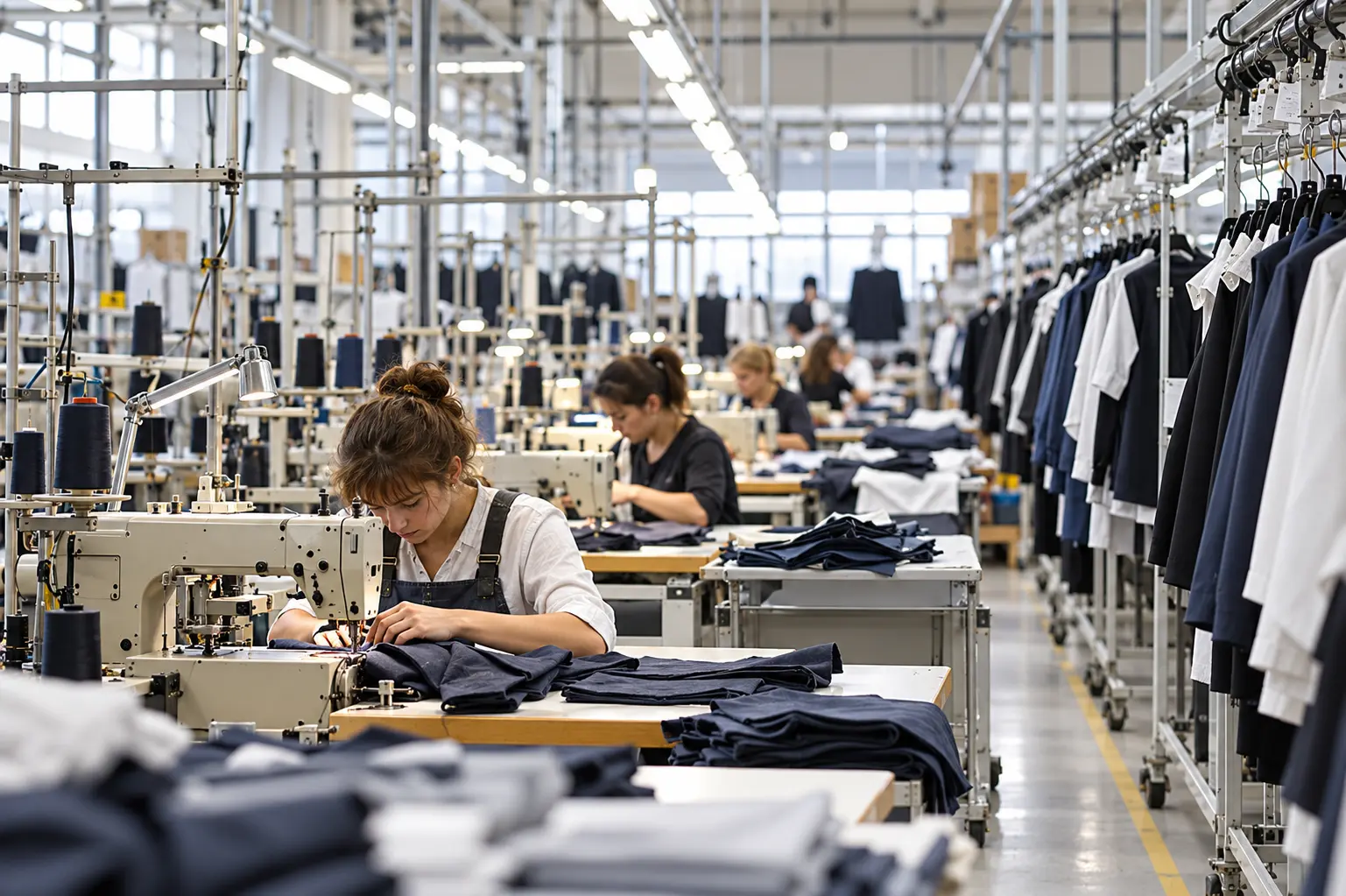
Increasing production can feel like a natural next step after a successful launch, but higher quantities also increase inventory risk and operational pressure. An emerging label working with a low MOQ clothing manufacturer should increase its MOQ only when customer demand, product performance and business systems give enough evidence that larger production makes sense.
The goal is not to produce more because the brand is growing. It is to produce more because the business can support it.
1. The Same Products Keep Selling Consistently
One strong launch is not always enough evidence to increase production.
A product may sell quickly because of an initial campaign, launch excitement or limited availability. What matters more is whether demand continues after that first spike.
Look for patterns such as:
- The same styles repeatedly selling well
- Regular requests for restocks
- Certain sizes or colours moving consistently
- Returning customers buying from new drops
- Demand continuing outside major promotions
If these patterns appear across more than one sales period, increasing MOQ may be more justified.
Consistency matters more than one unusually successful week.
2. You Keep Restocking the Same Styles
Frequent restocking can be a useful signal.
Suppose a brand produces a smaller quantity, sells through most of it and places another similar order shortly afterwards. If this happens repeatedly, the business may be spending unnecessary time restarting the same production cycle.
At this point, founders can compare the benefits and risks of producing a larger batch.
A low MOQ clothing manufacturer is valuable during the testing stage because smaller runs allow brands to learn what customers actually want. Once that learning becomes more reliable, increasing quantities on selected products may become the logical next step.
The key word is selected.
Scaling production does not mean every style needs a larger order.
3. Your Sales Forecasting Is Becoming More Reliable
Early-stage fashion businesses often have limited data.
After several launches, however, founders can start identifying patterns.
You may understand:
- Which products usually perform better
- Which sizes sell fastest
- How long inventory typically lasts
- Which months generate stronger demand
- How customers respond to different collections
This information makes production planning less dependent on guesswork.
If your forecasts are regularly close to actual sales, you have a stronger basis for discussing higher quantities.
If sales remain highly unpredictable, maintaining flexibility may still be more valuable than increasing MOQ.
4. Larger Production Fits Your Cash Flow
Higher MOQ should never be treated as only a production decision.
It is also a cash flow decision.
Ordering more units means committing more capital before those products are sold. That money cannot simultaneously be used for product development, photography, marketing, new collections or other parts of the business.
Before increasing production, founders should ask:
Can we fund this order without placing unnecessary pressure on the rest of the business?
The answer matters even when demand looks positive.
Scaling too early can turn successful products into excess inventory if the business produces faster than customers purchase.
5. Your Operations Can Handle More Inventory
More units create work beyond the factory.
Someone has to receive, organise, store, sell and fulfil those products.
If an emerging brand struggles to manage its existing inventory, increasing MOQ may simply make those problems larger.
Before scaling, review whether the business is ready for:
- Additional storage requirements
- Increased order volumes
- Inventory tracking
- More frequent fulfilment
- Customer communication
- Returns and exchanges
Production growth works best when the systems around production grow with it.
This is why choosing a low MOQ clothing manufacturer should be part of a wider operational strategy, not an isolated sourcing decision.
6. Your Next Collection Has a Clearer Product Strategy
Another sign of readiness is knowing which products deserve more production.
Brands rarely need to scale every SKU equally.
By the second or third collection, founders may begin dividing products into clearer groups.
For example:
Core products: Proven styles that customers repeatedly purchase.
Growth products: Styles showing strong potential but still requiring observation.
Experimental products: New ideas that should remain in smaller quantities until demand becomes clearer.
This approach allows brands to increase production selectively instead of making a broad decision across the entire collection.
That usually creates a better balance between confidence and flexibility.
Scaling Production Should Be a Business Decision
MOQ should rise because the evidence supports it, not because larger numbers make the brand feel more established.
Emerging labels need to look at demand, inventory movement, cash flow, operations and product strategy together.
UNYX STUDIO supports fashion startups across product development and manufacturing as part of a wider brand-building journey. For founders moving from smaller production runs toward more consistent volumes, working within a connected ecosystem can make it easier to align production decisions with the rest of the business.
A low MOQ clothing manufacturer can support the early testing stage, but the bigger objective is knowing when the brand has enough confidence and structure to scale responsibly.
FAQs
1. What does MOQ mean in fashion manufacturing?
MOQ stands for minimum order quantity. It refers to the minimum number of units a manufacturer is prepared to produce for a particular order or product.
2. Should a startup increase MOQ after one successful collection?
Not necessarily. One successful collection can be encouraging, but repeated demand and reliable sales patterns provide stronger evidence.
3. Is a higher MOQ always cheaper per unit?
Larger production runs can sometimes create production efficiencies, but founders should evaluate total inventory risk and cash requirements rather than focusing only on unit economics.
4. Should every product have the same MOQ?
No. Proven products may justify larger quantities, while newer or experimental styles may benefit from remaining at lower volumes.
5. How can UNYX STUDIO support brands as production grows?
UNYX STUDIO supports fashion businesses across product development, manufacturing and other connected stages of taking a brand to market, helping founders approach production as part of the wider business rather than as a standalone activity.