
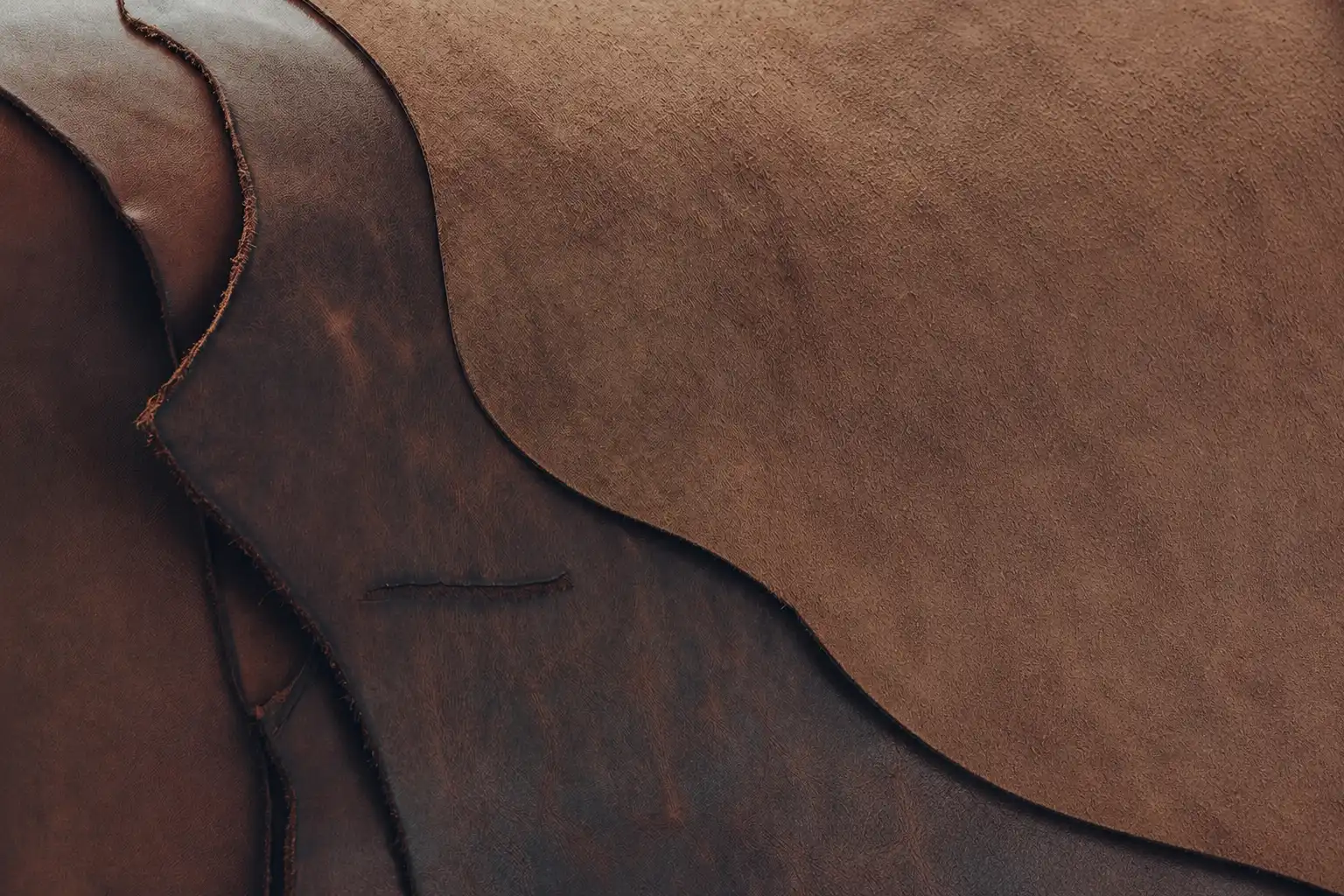
Leather is one of the few materials in fashion that doesn’t need a trend cycle to stay relevant. It’s been in every wardrobe, every decade, across every market segment. The opportunity for a new leather brand in 2026 is real.
What’s also real: leather is one of the most technically demanding categories to manufacture, one of the most capital-intensive to source, and one of the most competitive to position. Getting it right requires more preparation than most founders expect going in.
This is what that preparation actually looks like.
Start With The Material Decision, Not The Design
Most founders come to leather with a design in mind. That’s fine. But the material decision needs to happen before the design gets locked in, because leather is not one thing.
Full-grain, top-grain, genuine leather, suede, nubuck, bonded leather, and vegan alternatives all behave differently in production, age differently on the body, and price very differently at retail. A jacket built from full-grain leather and one built from bonded leather are not the same product at different price points. They’re different products with different customers, different care requirements, and different stories.
A leather clothing manufacturer with genuine category experience will push you to resolve this question before sampling begins. The ones who don’t are the ones who’ll produce a sample that looks fine and falls apart in six months.
Key material decisions to make early:
- Hide type and grade (bovine, lambskin, goatskin, or vegan alternative)
- Tanning method (vegetable-tanned for heritage positioning, chrome-tanned for softness and consistency)
- Finish (aniline, semi-aniline, pigmented), this affects how the leather ages and how it photographs
- Weight and hand feel relative to the silhouette you’re building
Get these answers before any design goes to sampling.
The Production Reality Of Leather Manufacturing
Leather manufacturing is slower, more technical, and more expensive than woven or knit apparel. That’s not a reason to avoid it. It’s the context for planning correctly.
Pattern making for leather is different
Leather doesn’t ease the way woven fabric does. Patterns need to account for that, and pattern makers without leather experience consistently underestimate the adjustments required. A sample that fits beautifully in cotton muslin can fit completely differently once it’s cut in leather.
Sampling takes longer
A single sampling round in leather typically runs four to six weeks. Build that into your timeline twice, because most leather samples require at least one revision round before production approval.
Hardware matters more than founders expect
Zippers, buckles, rivets, and studs on a leather garment are not decorative accessories. They’re structural components that affect the garment’s longevity and its perceived quality tier. Cheap hardware on premium leather is one of the fastest ways to position your brand in the wrong segment.
Cutting waste is a real cost
Leather comes in irregular hides, not bolts. A skilled leather apparel manufacturer will lay patterns to minimise waste, but waste is inevitable. Factor it into your costing before you commit to a price point.
Positioning A Leather Brand In 2026
The leather market in 2026 is not a single market. It’s several.
Heritage and craftsmanship positioning works for brands entering the premium and luxury segment, think vegetable-tanned leather, hand-finishing details, and a brand narrative built around longevity. The customer in this segment is buying against fast fashion, specifically.
Contemporary and trend-driven positioning works for brands entering the mid-to-upper contemporary segment, think seasonal colours, fashion-forward silhouettes, and a content strategy built around editorial relevance.
Sustainable and alternative leather positioning is its own category now. Brands using Piñatex, mushroom leather, apple leather, or recycled materials have a distinct and growing customer base that buys the material story as much as the product.
Know which of these you’re building before the first campaign shoot. The positioning shapes everything: the manufacturer you need, the price architecture, the content aesthetic, and which press actually cares about covering you.
The Go-To-Market Mistakes Leather Brands Make
Launching without a proper campaign. Leather garments photograph differently from other categories, the texture, the sheen, the way the material moves under studio lighting all require a photographer who understands how to capture it. Generic product shots on a white background undersell a leather brand every time.
Underpricing to compete. Leather has real cost floors. A brand that prices below those floors to capture market share is either cutting quality somewhere or burning margin it can’t sustain. Neither works long-term.
Skipping the care and quality story. Leather customers want to know how to care for the product, how it ages, and what makes this garment worth the price. Brands that skip this in their content are leaving a significant trust signal on the table.
UNYX STUDIO is headquartered in Noida, India, with regional offices in New York and Sydney.
This international structure allows us to support brands developing and manufacturing products in India while preparing to launch across the USA, Australia and other global markets.
For emerging leather labels, this means product development, manufacturing, brand-building and market-entry planning can remain connected rather than being managed through several unrelated providers.
Build More Than A Leather Collection
Leather is a category that rewards preparation.
The choice of hide, tanning method, finish, construction, hardware and production partner influences not only the quality of the product, but also the market position the brand can realistically occupy.
A strong launch therefore requires more than technical manufacturing. It requires product decisions, branding, content and commercial planning to work together from the beginning.
UNYX STUDIO helps fashion startups and emerging labels build that foundation. As a Fashion Startup Enabler, we combine design, manufacturing and marketing support to help founders move from an initial concept to a market-ready and scalable fashion business.
With an owned SEDEX and OEKO-TEX compliant factory in India, a supply chain of more than 100 trusted suppliers, headquarters in Noida and regional offices in New York and Sydney, we provide the infrastructure and international support required to develop leather collections for global markets.
Book a discovery call with UNYX STUDIO to discuss your leather collection, material requirements and commercial goals, and explore how an end-to-end partnership can help you build, launch and scale your brand.
FAQs
1. What should I consider before launching a leather fashion brand?
Before launching, define your target market, choose the right leather or alternative material, develop a clear brand identity, understand production costs, and work with an experienced leather clothing manufacturer who can support quality production.
2. How do I choose the right leather clothing manufacturer?
Look for a manufacturer with expertise in leather apparel, access to quality materials, strong sampling capabilities, reliable quality control, transparent production timelines, and experience producing products similar to your collection.
3. What types of leather are commonly used in fashion manufacturing?
Common options include full-grain leather, top-grain leather, genuine leather, suede, nubuck, and various vegan leather alternatives. Each material differs in appearance, durability, texture, cost, and intended market positioning.
4. Why is sampling important when producing leather garments?
Sampling allows designers to assess fit, construction, material performance, hardware, and overall product quality before full production begins. Multiple sample revisions are often necessary to achieve the desired finish and craftsmanship.
5. How can a new leather fashion brand stand out in a competitive market?
A strong brand identity, high-quality craftsmanship, thoughtful material selection, professional product photography, compelling storytelling, and consistent customer experience can help differentiate a leather fashion brand and build long-term customer trust.