
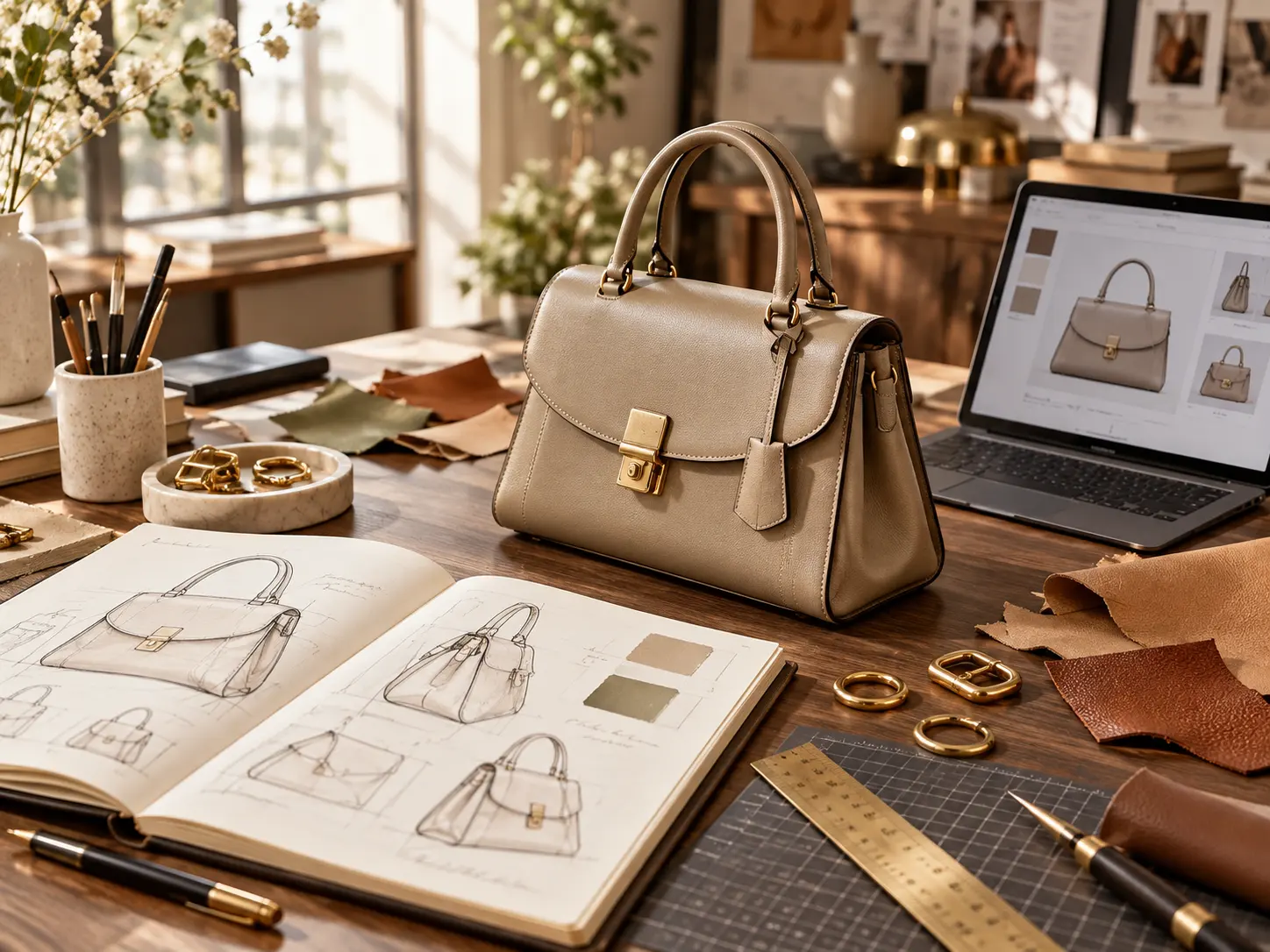
Adding handbags can take a fashion brand into a new product category, but it should not be treated as simply putting a logo on an existing bag. A successful private label bags collection needs to fit the brand’s identity, customer and wider product range. That requires clear design direction, product development, manufacturing and a launch plan that works together.
For an emerging label, the first question is not “Which bags should we make?” It is “Why should our customers buy bags from us?”
First, Decide What Handbags Add to Your Brand
A new category should have a reason to exist.
For an apparel label, handbags may extend the brand’s design language into accessories. For a lifestyle-focused brand, they could become part of a broader product ecosystem. Another business may see bags as a way to offer customers products that complement its existing collection.
Before designing anything, founders should clarify:
- Who is the bag being designed for?
- How will customers use it?
- What price positioning is the brand targeting?
- Which existing products should it complement?
- What visual elements should connect it to the brand?
- Will bags be a permanent category or an initial test?
These answers create a stronger brief for everything that follows.
Build a Small Collection With Clear Roles
Launching handbags does not necessarily mean launching ten different styles.
For a first collection, focus can be useful.
Instead of selecting several unrelated designs, think about the role of each bag. One may be intended for everyday use, another may offer a smaller format, while a more distinctive piece could communicate the collection’s design identity.
The products should feel related without looking identical.
This gives customers choice while allowing the brand to establish a recognisable point of view.
For private label bags, collection planning also helps prevent the category from feeling disconnected from the apparel or other products already associated with the brand.
Move From Inspiration to Product Development
A mood board is a starting point, not a manufacturing brief.
Once the collection direction is established, each design needs to become a product that can actually be developed.
This is where founders start working through details such as shape, proportions, compartments, closures, handles, straps, materials and other design elements relevant to the product.
Sampling then gives the brand something physical to assess.
A bag may look balanced in a drawing but feel too large in hand. A strap length may need adjustment. A compartment may not work as expected. Certain details may need refinement once the product is seen and used.
These are exactly the issues product development should identify before production.
Review the Sample Like a Customer Would
Founders can become so familiar with a design that they review samples only against the original concept.
A better test is to experience the product as a customer.
Pick it up. Open it. Carry it. Look inside it. Consider how it works with the clothes your customer already wears.
Ask:
Does this feel like our brand?
Then move into more practical questions:
- Is the size appropriate for its intended use?
- Do the proportions look right?
- Are the functional details easy to use?
- Does the construction support the intended design?
- Is anything included simply because it looked good in the concept?
A strong sample review protects both product quality and brand identity before private label bags move into manufacturing.
Plan Manufacturing Around the Collection Strategy
Once products are approved, production needs to reflect the commercial plan.
Not every bag necessarily requires the same quantity. A more experimental design may need a different approach from a style the brand expects to make central to the collection.
Founders should also avoid viewing manufacturing as a completely separate stage.
Production decisions affect inventory. Inventory influences launch planning. Launch timing affects content and marketing.
This connection matters when introducing an unfamiliar category because the brand has less historical sales information to rely on.
The objective should be controlled expansion, not simply adding more stock.
Prepare the Brand Story Before the Bags Are Finished
Waiting until manufacturing is complete to think about marketing can leave the launch feeling rushed.
While products are progressing, the brand can start defining how the collection will be introduced.
What inspired the category? How does it connect with the existing brand? Which products should lead the campaign? What does the customer need to understand about each design?
From there, teams can prepare photography, content, e-commerce requirements and launch communication.
This helps the collection arrive as part of the brand rather than appearing as an unexpected product addition.
From a New Category to a Stronger Fashion Brand
Handbags can expand what a fashion brand offers, but successful category expansion requires more than sourcing a finished product and adding branding.
UNYX STUDIO supports fashion businesses from concept and design through product development and manufacturing, with handbags included among the categories it works across. Its wider ecosystem also covers branding, photography and content, digital marketing, e-commerce, marketplace management, warehousing and logistics.
For founders planning private label bags, this connected approach can help move the idea from a category opportunity to a developed collection that fits naturally within the wider fashion business.
FAQs
1. Can an apparel brand add handbags to its existing collection?
Yes. The important consideration is whether the handbags fit the brand’s positioning, customer and overall design direction.
2. Should a first handbag collection include many styles?
Not necessarily. A focused collection can help a brand test the category and establish a clearer design direction before expanding further.
3. Why is sampling important when developing handbags?
Sampling allows the brand to evaluate proportions, construction, functionality and design details before moving into production.
4. When should marketing for a handbag collection begin?
Launch planning can begin while the products are being developed so that photography, content, e-commerce and marketing are ready closer to product availability.
5. Can UNYX STUDIO support more than handbag manufacturing?
Yes. UNYX STUDIO’s wider services include concept and design, product development, manufacturing, branding, content, marketing, e-commerce, marketplace management, warehousing and logistics.